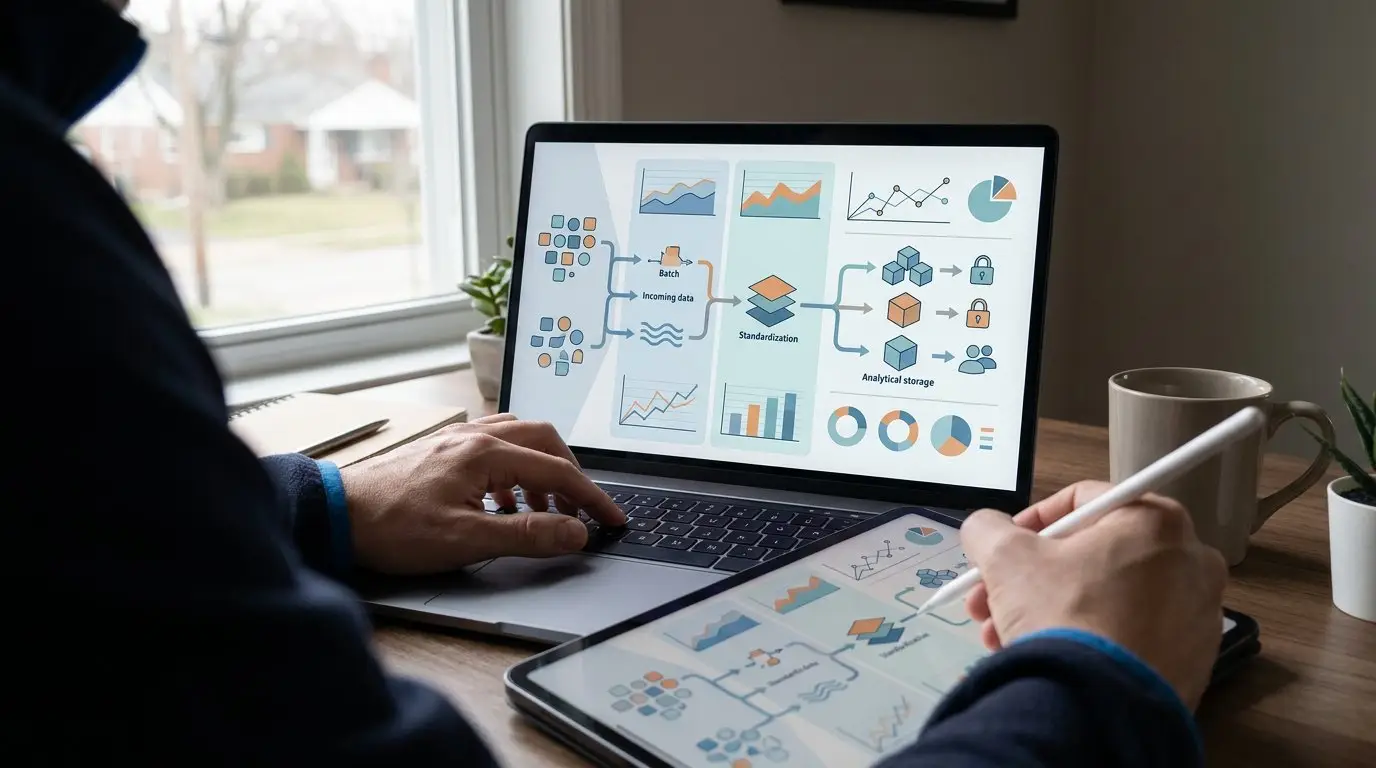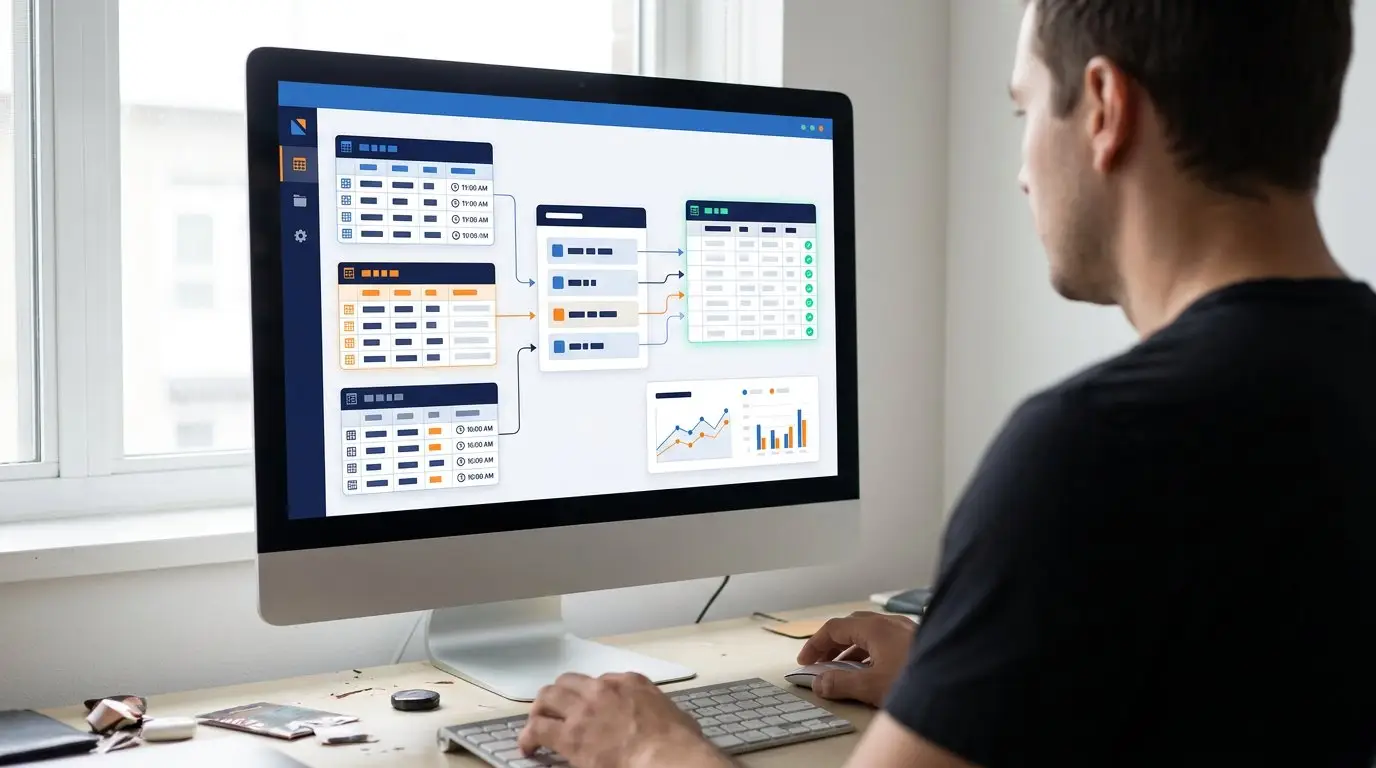
Consistent analytics depend on consistent data, not just capable dashboards. Enterprise data standardization establishes shared formats, definitions, and validation rules across systems, so teams can interpret the same fields the same way and produce more reliable analyses and visualizations. It works alongside data governance: governance assigns ownership and maintains the standards, while standardization applies them to data as it moves through the organization.
You’ll learn how enterprise data standardization differs from data cleansing and database normalization, how governance keeps standards aligned, and why consistent fields and timestamps matter for analytics. This gives you a practical framework for assessing how standardized data can support decisions across your organization.
Key Takeaways
- Align formats, field names, and business definitions across systems to reduce integration friction and make shared data easier to interpret.
- Distinguish consistent formatting from data cleansing and database design so each practice addresses the right data problem.
- Connect standards to governance roles and ongoing quality monitoring to keep data rules clear as systems and business needs change.
- Standardize fields and timestamps before analysis to support more consistent queries, dashboards, and visualizations.
What is data standardization?
Enterprise data standardization aligns formats, definitions, and validation rules across datasets. This helps systems combine records consistently, supporting dependable data integration and analytics.
Inconsistency and Integration Challenges
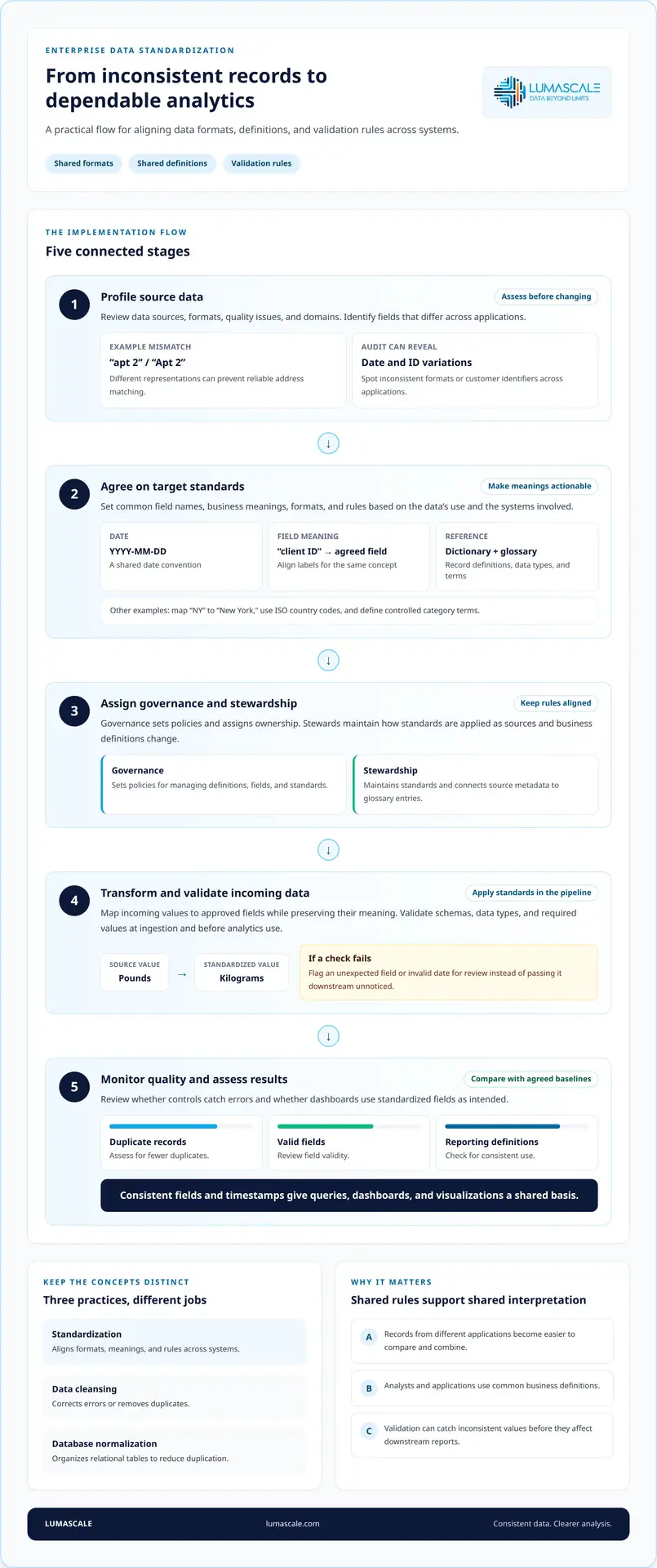
Inconsistency occurs when systems represent the same information differently, such as “apt 2” and “Apt 2.” That variation can prevent reliable matching when address records move between applications. Postal codes such as “12345” and “12345-6789” also use different formats. Without agreed guidelines, integration may produce incomplete matches, duplicate records, or fields that downstream systems cannot interpret. For you, these mismatches can undermine reports that combine customer information from separate sources.
Data Quality and Integration Benefits
Standardization applies shared formats and definitions so integrated records can be compared and interpreted consistently. For example, converting pounds to kilograms gives teams a common measurement across datasets. Mapping “NY” to “New York” can align customer records from different systems. These rules improve data quality by reducing format inconsistencies before they reach reports. They also give analysts and applications a shared basis for combining information across business functions.
Start by profiling source data, identifying inconsistent fields, and mapping them to agreed target formats. An audit, for example, can reveal different date formats or customer identifiers across applications. Scope and timeline depend on the number and condition of the sources, the fields involved, and the complexity of the transformations. More formats and dependencies mean more mapping and validation work.
During data integration, transformation rules convert incoming values into standard fields while preserving their meaning. Pipeline integrity checks can validate schemas, data types, and required values at ingestion and before analytics use. A failed check can flag an unexpected field or invalid date for review instead of letting it pass downstream unnoticed. These controls help isolate source-system changes and protect reports from avoidable inconsistencies.
Assess results against agreed baselines, such as fewer duplicate records, more valid fields, and consistent reporting definitions. Review whether validation rules catch errors and whether downstream dashboards use the standardized fields as intended. These measures connect implementation work to practical outcomes without relying on a single quality score.
Definition and related data-management concepts
Data standards turn organizational definitions into operational conventions that systems and teams can apply consistently. A shared framework clarifies how fields are represented, interpreted, and maintained.
Data Standardization Definition and Purpose
Data standardization defines consistent formats, meanings, and rules for information across an organization. Its purpose is to make records from different applications comparable, so teams can combine data and interpret insights using the same definitions. For example, mapping “client ID” and “customer number” to one agreed business field prevents separate labels from being mistaken for separate concepts. This gives data management a common foundation for analytics and operational workflows.
Data Dictionaries and Field Definitions
A data dictionary records what each field means and how systems should represent it. A useful entry defines the field name, expected data type, and update frequency, giving engineers and analysts a shared reference. A business glossary complements it by documenting terms, dependencies, and required transformations. For example, a glossary can distinguish a “customer” from a “prospect,” while metadata connects each term to its source fields. Together, these definitions make standards actionable across teams.
Common Data Standards and Formats
Common standards specify agreed structures for dates, identifiers, measurements, and categories. A date convention such as YYYY-MM-DD reduces ambiguity between regional formats; country values can use ISO codes rather than inconsistent country names. Controlled vocabularies establish approved category terms, while unique identifiers help link records. Choose conventions based on the data’s use and the systems involved. This matters because an analytics model needs stable field meanings, not just matching column names.
Standardization differs from data cleansing, which corrects errors or removes duplicates, and database normalization, which organizes relational tables to reduce duplication. For example, separating customers, addresses, and orders into linked tables is database normalization; aligning the date and field definitions across those tables is standardization. Ontologies can formalize the meaning of entities and relationships. For sustained alignment, managed data operations can support the maintenance of standards as sources and business definitions evolve.
Professional implementation of data standardization and data governance
A professional framework turns agreed data rules into repeatable controls across source systems and analytics workflows. Governance assigns owners to maintain those controls as business definitions and platforms change.
Professional Implementation Steps and Framework Components
A practical implementation assesses data sources, formats, quality issues, and domains before introducing standards incrementally. The framework combines documented definitions, transformation rules, assigned roles, validation checks, and ongoing quality monitoring. These components clarify how incoming records map to approved structures and how exceptions are handled. Prioritizing domains can limit disruption while establishing repeatable operational controls.
Metadata, Governance, and Stewardship
Metadata describes fields, formats, relationships, and definitions; governance sets the policies for managing them, while stewards maintain their application. Stewards can link source metadata and alias terms to business glossary entries, helping users trace records to shared definitions. This supports consistent interpretation across systems and helps teams identify where a field originates before using it in reports or operational processes.
Governance and Accountability
Data governance assigns responsibility for validating, documenting, and enforcing standards. A data steward can define rules, approve changes, and address errors as source systems or business needs shift. Teams can monitor adoption, quality measures, and compliance outcomes, then adjust standards as processes evolve. This accountability keeps decisions about definitions and transformations visible instead of leaving separate teams to make conflicting changes.
Privacy, Security, and Regulatory Requirements
In the United States, privacy and security considerations depend on the data and industry involved. Healthcare organizations must account for HIPAA when standardizing patient data. A framework should document how sensitive fields are defined, transformed, and traced through workflows. For organizations handling data across borders, the European Union identifies GDPR as a regulatory requirement for data handling and processing. Clear governance supports consistent controls and compliance review.
Standardized data for analytics and visualization
Standardized data gives analytics systems consistent fields to combine and compare across sources. That consistency affects whether a chart reflects business activity or differences in how systems recorded it. For example, a dashboard can misstate lead volume if one source labels a prospect “lead” and another uses “inquiry.” Shared definitions make analysis and reporting more meaningful.
Field definitions shape the metrics teams use to make decisions. If “user session” means different things across applications, a query may count different events under one label. Data governance can maintain the agreed definition and connect it to each source field. This gives analysts a stable basis for comparing reports and makes the assumptions behind each metric visible to business users.
Timestamps also affect visualization. Consistent timestamp formats help time-series charts place events in the right sequence and support more nuanced analysis. For example, a marketing report combining impressions from multiple sources needs aligned date and time conventions. Without them, records may appear in unexpected periods, obscuring trends or weakening campaign comparisons. Standardized time fields make those patterns easier to interpret.
In batch integration, mapping profiles can transform incoming fields into standardized views or materialized tables. A pipeline can apply transformations, then run schema validation and data integrity checks before publishing records for analysis. These controls catch changed field types and missing values upstream. They also help isolate source changes, reducing the need to rebuild downstream reports whenever an application alters its output.
Standardized product and customer records can support retail reporting across catalogs, inventory, and sales sources. Consistent identifiers help analysts distinguish genuine activity from duplicates, while shared categories enable comparable product views. For example, a hierarchy that classifies items as Electronics, Mobile Phones, and Smartphones can support analysis at different levels. The practical test is whether teams can trace a reported measure to consistent definitions and validated source data.
Align analytics pipelines and reporting rules with professional data standardization services to create a dependable foundation for business insights.
Lumascale
Lumascale helps organizations connect data standardization with the analytics and visualization workflows that rely on consistent inputs. The Lumascale Data Platform brings together data ingestion, standardization, and visualization/BI capabilities, supporting a path from source data to reporting. Managed Services and Professional Services can provide operational expertise to align data workflows with organizational requirements.
Turn to Lumascale when inconsistent formats, disconnected sources, or changing analytics needs call for coordinated platform and professional support. Data Exchange can support movement between systems as part of a broader integration approach. The right next step depends on your data landscape, intended use cases, and the workflows you need to standardize.
Contact Lumascale to discuss how its platform and services can support your data standardization goals.
Build a Data Foundation That Can Evolve
Treat enterprise data standardization as an evolving operating capability, not a one-time cleanup. As source systems and reporting priorities change, preserve shared meaning while adapting the workflows around it. Build adaptability into future planning: make standards reviewable, assign ownership for changes, and connect updates to the analytics outcomes they support.
Lumascale offers The Lumascale Data Platform, Managed Services, and Professional Services to support organizations advancing data initiatives. Its team can help align platform implementation and operational support with your data priorities, keeping standardization connected to how your teams use information.
For a focused next step, identify the business decision your analytics must improve, then align the required data capabilities and operating model with that outcome. A clear use case gives your team a practical basis for setting priorities and evaluating progress as requirements evolve.
Contact Lumascale to discuss your data needs and take the next step toward analytics that can adapt with your organization.
Frequently Asked Questions
What is enterprise data standardization and why does it matter?
Standardization gives teams a shared basis for interpreting information across business units. Its value becomes clear when finance and sales assess customer retention: if each team classifies an inactive account differently, a combined measure can mislead. Agreed definitions help leadership interpret that metric consistently and connect decisions to the same operational meaning.
How does a provider implement enterprise data standardization?
A provider typically scopes the work around business priorities, source systems, and affected analytics. The provider can map existing fields to agreed target definitions, test transformations with representative records, and review exceptions with business owners. For example, a customer-status change should be assessed in the reports and applications that consume it, so teams can identify downstream impacts before broad deployment.
How do master data management, data governance, and data standardization differ?
Master data management coordinates core entities, such as customers or products, so systems can use reliable shared records. Data governance establishes decision rights, policies, and accountability for managing information. Standardization defines how data fields and meanings should align. These disciplines work together: governance sets ownership, standardization supplies consistent rules, and master data management applies them to key enterprise entities.
What tools and platforms support data standardization?
Tools support different stages of the data lifecycle. Apache Airflow can coordinate pipeline workflows, while dbt can support data transformations; Talend, PySpark, and Apache NiFi can support ETL processes. Selection depends on existing architecture, source types, transformation needs, and validation requirements. A platform approach can connect ingestion, standardization, and analytics within a shared workflow.
What are the main risks and challenges of standardizing enterprise data?
Key risks include assigning a shared label the wrong business meaning, overlooking exceptions, and disrupting downstream systems during a change. A rule that fits one department may erase distinctions another team needs. Providers can reduce these risks by involving data owners in rule decisions, testing changes against representative use cases, and tracking exceptions so standards evolve without obscuring legitimate differences.